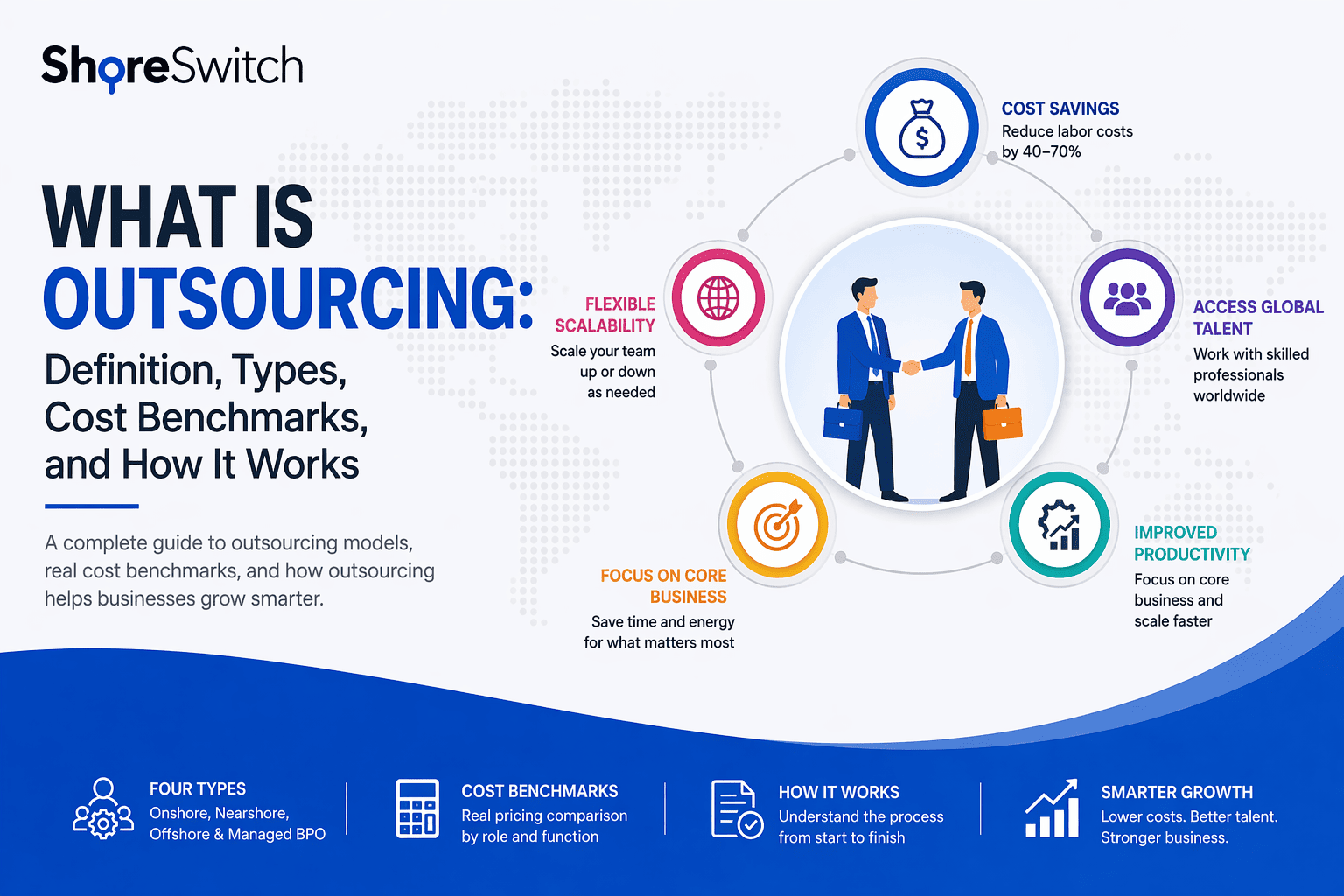

HR outsourcing means partnering with external specialists to handle payroll, benefits, compliance, and recruiting while your team focuses on growth. The core benefit is simple: you access specialized HR expertise without adding full-time headcount. Four main models exist in 2026: PEOs (co-employment), HROs (broad services), ASOs (administrative only), and offshore staffing for HR support roles. The right choice depends on your headcount, risk tolerance, and how much control you want to retain. Done well, outsourcing HR functions frees leadership time, reduces compliance risk, and gives your business access to benefits and technology that would otherwise be out of reach.
The human resource outsourcing market size was estimated at nearly $20 billion in 2024 and is expected to reach over $31 billion by 2030. That growth reflects a real shift. Post-2020, HR workloads and compliance pressures increased sharply. SMB owners with 10-250 employees are using outsourced HR services to access expertise they cannot justify hiring in-house.
HR outsourcing in 2026 means accessing specialized HR expertise without adding full-time headcount
Outsourcing human resources involves partnering with external providers to run specific HR tasks like payroll processing, benefits administration, HRIS management, regulatory compliance, and talent acquisition. Your business retains focus on core business activities while specialists handle the HR operations.
The root attribute behind every benefit: outsourced HR services deliver deep, specialized expertise without the salaries, benefits, and management overhead of building a full in-house HR department. HR outsourcing providers typically employ subject matter experts who specialize in complex areas such as employment laws, benefits administration, and employee relations.
Common HR functions outsourced by 10-250 employee businesses include multi-state payroll, managing payroll taxes, ACA reporting, FMLA tracking, workers’ compensation administration, and background checks. These providers also bring modern HR technology that SMBs could not justify licensing alone.
HR outsourcing in 2026 delivers nine core benefits that go beyond simple cost savings
While cost savings remain important, 2024-2025 surveys show that access to talent and risk management are now equal or greater drivers for outsourcing HR. Each benefit flows from the same root: SMBs obtain enterprise-grade HR capabilities without adding in-house HR team members.
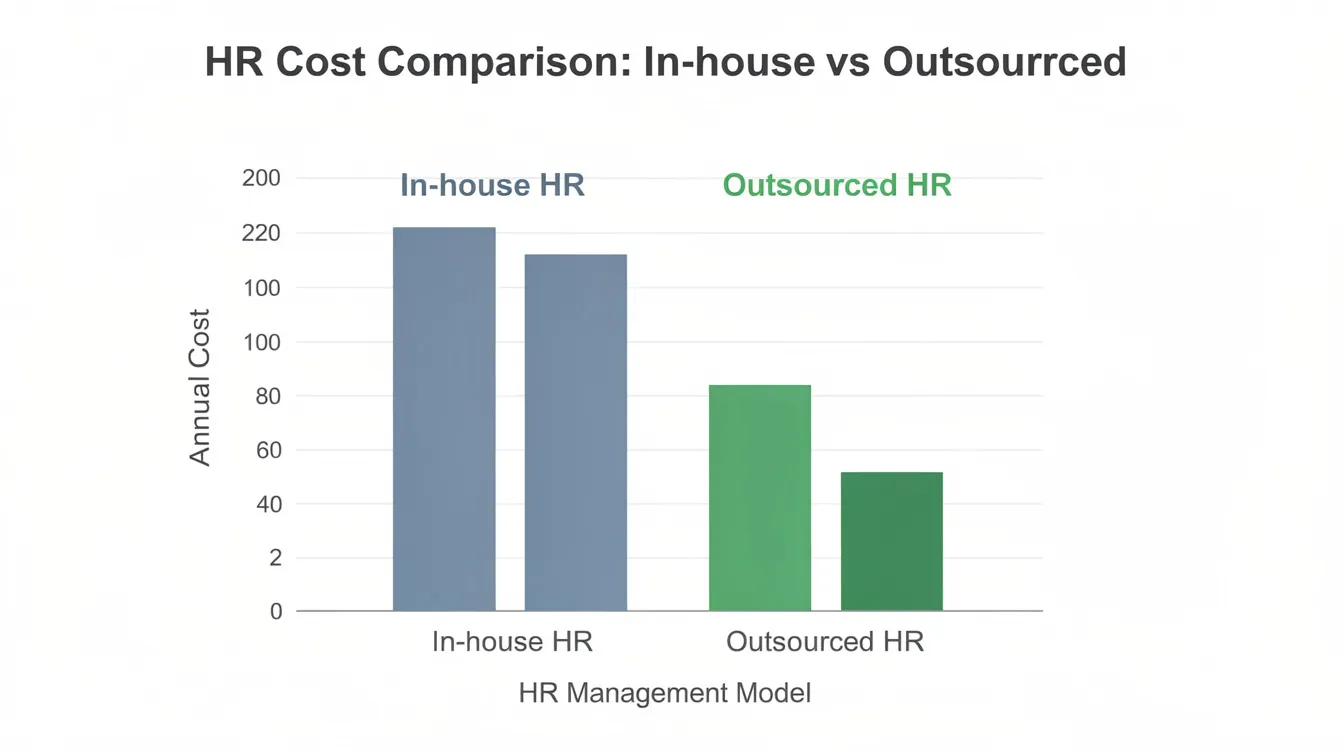
HR outsourcing reduces total HR costs by 20-30 percent for many 10-100 employee businesses
Outsourcing can offer an estimated 20-30% reduction in administrative costs, with some businesses saving up to 50% compared to maintaining internal teams. Companies can avoid the high expense of full-time HR salaries, which averaged $127,220 for managers in 2022, plus approximately 29.6% in benefits.
According to a Paychex survey, companies can spend as much as $413,000 annually on HR administration. Outsourcing HR functions can significantly reduce costs by eliminating expenses related to hiring, training, and maintaining an in-house HR team. Outsourcing also eliminates additional costs for office space, utilities, and ongoing training for internal staff.
HR outsourcing significantly reduces compliance and regulatory risk
Specialized providers stay updated on complex federal and state labor laws, helping companies avoid costly fines for non-compliance, which can reach $50,000 for issues like overtime violations. HR outsourcing providers are equipped to handle the complexities of compliance, including monitoring labor laws, tax requirements, and workplace safety standards.
Nearly one in three business leaders reported that outsourcing HR administration tasks improved their ability to maintain compliance. This includes managing multi-state payroll taxes, I-9 documentation, FLSA classification, overtime calculations, COBRA notices, and mandated leave tracking.
HR outsourcing gives SMBs access to specialized expertise
Outsourcing HR functions allows businesses to access specialized expertise in various areas of human resources management, including recruitment, payroll administration, and regulatory compliance, which may be difficult for small businesses to manage in-house. By partnering with an HR outsourcing firm, businesses can gain access to enterprise-class benefits and advanced HR technology that they may not be able to afford on their own.
HR outsourcing allows leaders to refocus on revenue growth
By delegating non-core HR tasks, leadership can devote more time to strategic initiatives and business growth. More than 40% of business leaders reported that outsourcing HR functions leads to increased productivity by enabling them to concentrate on strategic business functions. By delegating HR responsibilities to external experts, organizations can streamline operations and enhance productivity.
HR outsourcing strengthens employee benefits packages
Professional Employer Organizations use their large group bargaining power to negotiate health insurance and retirement plans at significantly lower rates than small businesses could secure alone. Outsourced partners provide access to better employee benefit packages and enhanced onboarding and training programs that improve retention.
Access to higher-quality benefits and formal learning and development resources through HR outsourcing can significantly enhance employee engagement and contribute to a positive company culture. Outsourcing HR can help improve employee satisfaction by simplifying processes like payroll, benefits management, and onboarding.
HR outsourcing improves scalability and workforce flexibility
Outsourcing HR allows businesses to scale their HR functions up or down with ease, adapting to changing needs such as rapid growth during expansion or reducing costs during downsizing. HR outsourcing provides businesses with the flexibility to access tailored HR services based on their specific industry needs.
HR outsourcing strengthens talent acquisition outcomes
Specialized recruiters can reduce time-to-hire by up to 40% and improve candidate quality through established talent networks and refined screening tools. Outsourcing firms implement best-practice workflows and automation for repetitive tasks like payroll, which can reduce processing time significantly.
HR outsourcing provides access to modern HR technology
Companies gain access to sophisticated Human Resource Information Systems and Applicant Tracking Systems without the heavy upfront investment and maintenance costs required for in-house software.
HR outsourcing enables better data-driven decisions
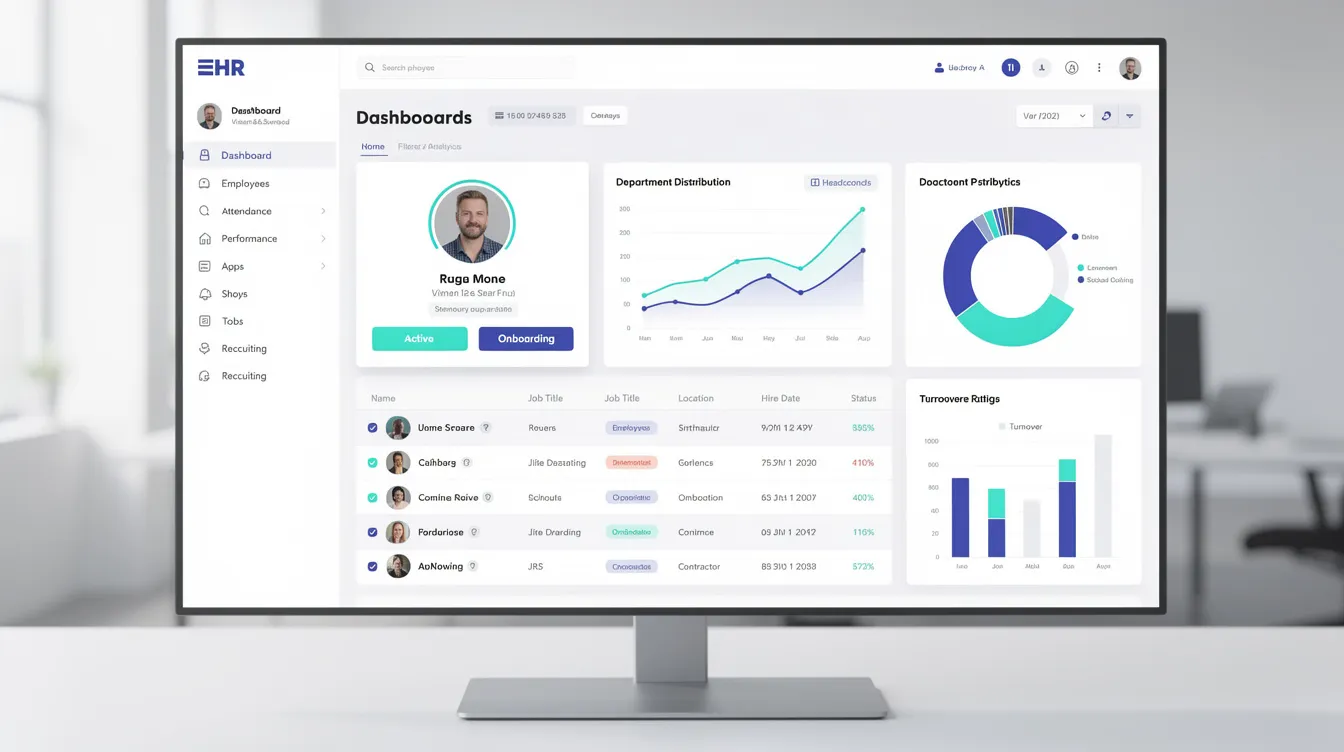
Standardized reporting on headcount, turnover, overtime, and benefits participation helps owners see patterns and make proactive decisions about their workforce.
HR outsourcing in 2026 relies on four main service models
Four primary HR outsourcing models exist: PEO, HRO, ASO, and offshore staffing for HR-related roles. Each delivers specialized HR expertise without full-time hires through different mechanisms.
PEOs offer bundled compliance, payroll, and benefits under co-employment
A Professional Employer Organization enters a co-employment relationship, appearing as the employer of record for tax and benefits purposes. PEOs bundle payroll processing, tax filings, benefits sponsorship, and workers’ compensation coverage. They suit 50-150 employee companies prioritizing benefits access and risk transfer, though they offer less flexibility in benefits design.
HRO and ASO models deliver flexible service without co-employment
HRO providers manage broad HR processes, including recruitment, performance management, and compliance support, while you remain the sole employer of record. ASO providers handle core administrative tasks like payroll and tax filings. Both suit companies want expert help while keeping direct control over policies and company culture.
Offshore staffing adds dedicated HR support without co-employment
Offshore staffing involves recruiting skilled HR professionals who work full-time for your team, reporting to your managers. This model works well for process-driven HR tasks like payroll data entry, benefits enrollment, and HRIS administration. Offshore staffing services for small businesses can combine with PEO or HRO arrangements. For example, businesses might use a PEO for compliance while dedicated offshore accounting staff handles day-to-day administration.
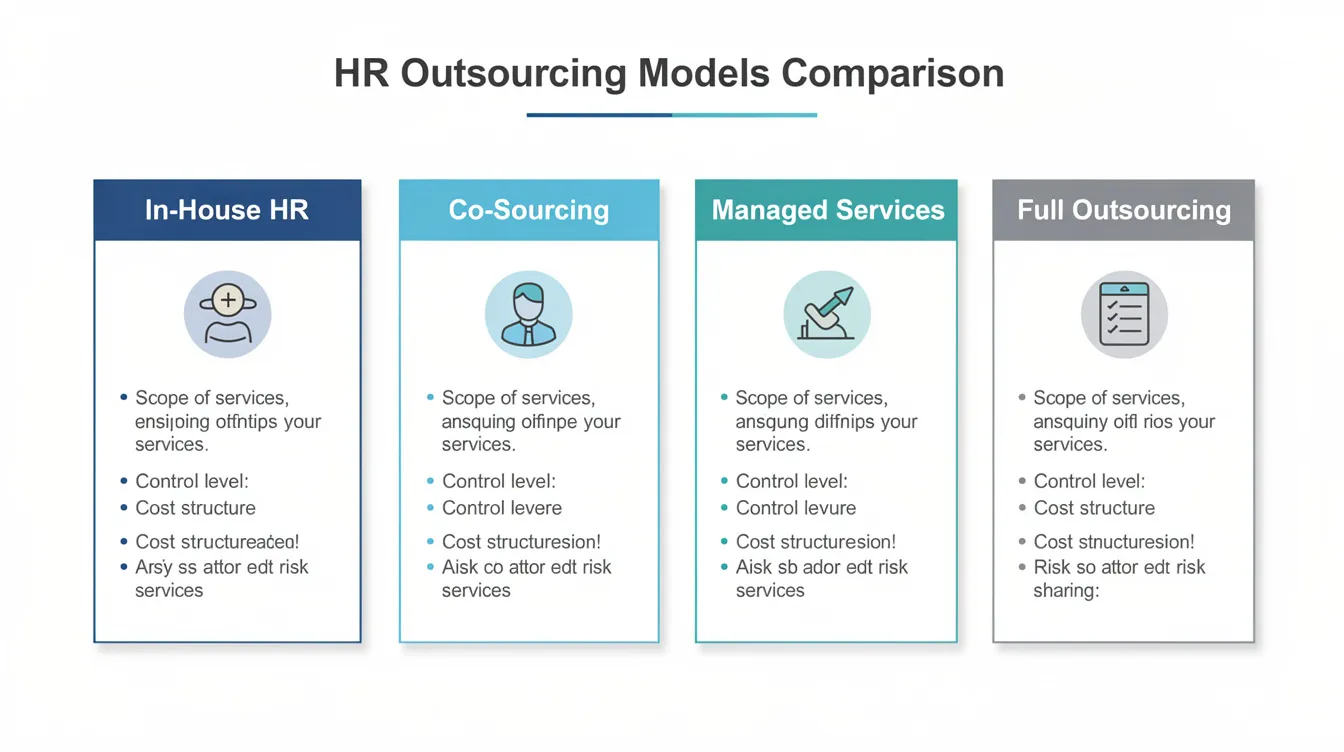
HR outsourcing changes cost structure for 10-250 employee companies
Outsourcing reshapes fixed HR costs into variable, usage-based expenses. Direct savings include reduced HR salaries and software costs. Indirect savings come from avoided penalties and legal fees. Opportunity cost savings emerge when leadership time shifts to growth activities.
HR outsourcing lowers legal exposure through centralized compliance expertise
Centralizing compliance expertise with a specialized provider reduces wage and hour claims, benefits misadministration, and regulatory fines. Reduced compliance risks mitigate legal penalties related to taxes, payroll, and labor regulations. Outsourcing HR can help businesses stay compliant with changing employment laws, which is crucial to avoid costly fines.
HR outsourcing should be timed to specific headcount thresholds
| Employee Count | Recommended Approach |
|---|---|
| 1-10 | Payroll software, selective outsourcing |
| 10-50 | HRO/ASO or skilled offshore support for SMBs |
| 50-150 | PEO viable, or hybrid with offshore technology professionals |
| 150-250 | In-house HR plus selective outsourcing |
HR outsourcing must address concerns about control, culture, and data security
Owners hesitate due to fears about losing control, diluting company culture, or risking employee data. Practical mitigations include setting clear escalation rules, keeping core culture functions in-house, requiring robust data security certifications, and conducting regular service reviews. Good HR outsourcing relationships are collaborative, not hands-off.
Choosing the right HR outsourcing partner requires a structured approach
Success depends on matching the right model to your company’s size, industry, and internal capabilities. Evaluate providers on: clarity about which HR functions to outsource, expertise and certifications, technology capabilities, service model transparency, and cultural fit. Ask for client references from similarly sized businesses.
Taking the next step with HR outsourcing
HR outsourcing gives SMBs specialized expertise, modern systems, and reduced risk without building a full in-house HR department. The right approach varies by headcount and growth plans. Hybrid models are increasingly common, such as PEO for compliance plus offshore staffing for e-commerce businesses handling daily support.
Map your current HR pain points against these nine benefits. Shortlist 2-3 models to investigate rather than defaulting to a single path. HR outsourcing is a practical lever you can pull when you are ready.